
Innerspec successfully deployed an automated ultrasonic inspection cell for thermoplastic composite clips at an aircraft manufacturing facility in the United States. Built on Innerspec’s CHORUS robotic NDT platform, the system operates in a high-demand production environment supporting nearly 2,000 unique part families.
Robotic nondestructive testing (NDT) systems are widely used in manufacturing despite their known challenges. These inspection cells are expensive, difficult to operate, and poorly suited to the realities of most production environments. They require frequent retuning to accommodate part variability, depend on expert programmers, and often fall short of productivity expectations. Once installed, their custom-built gantries, modified robots, and bespoke hardware create one-of-a-kind “monuments” that are difficult to maintain and update.
The aircraft manufacturing facility required an inspection solution capable of delivering high productivity while solving common challenges such as part variability and adaptability. Innerspec’s inspection cell achieves a two-minute and thirty-second cycle time for parts ranging from 6-ply to 14-ply thermoplastic laminates, while maintaining consistent inspection quality across a high-mix population of complex geometries.
A primary hurdle was thermoplastic forming parts variability, which often resulted in parts that were not consistently parallel to the ultrasonic probe. Under these conditions, standard fixed-position inspections are impractical. Rather than relying on tight fixturing tolerances or manual intervention, Innerspec developed an adaptive ultrasonic alignment technique. This technology compensates for part deviations in real-time, ensuring precise data acquisition without slowing down production.
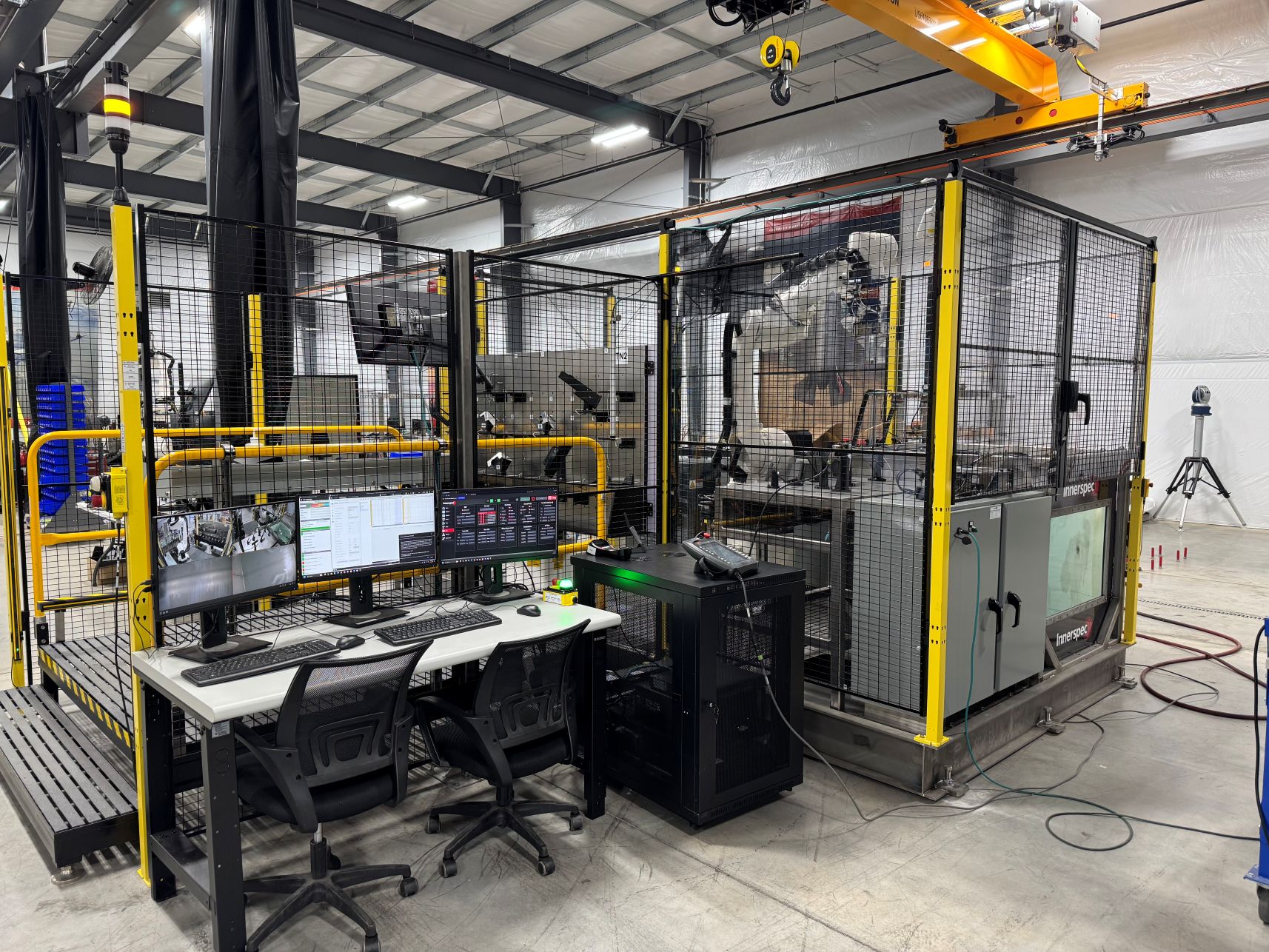
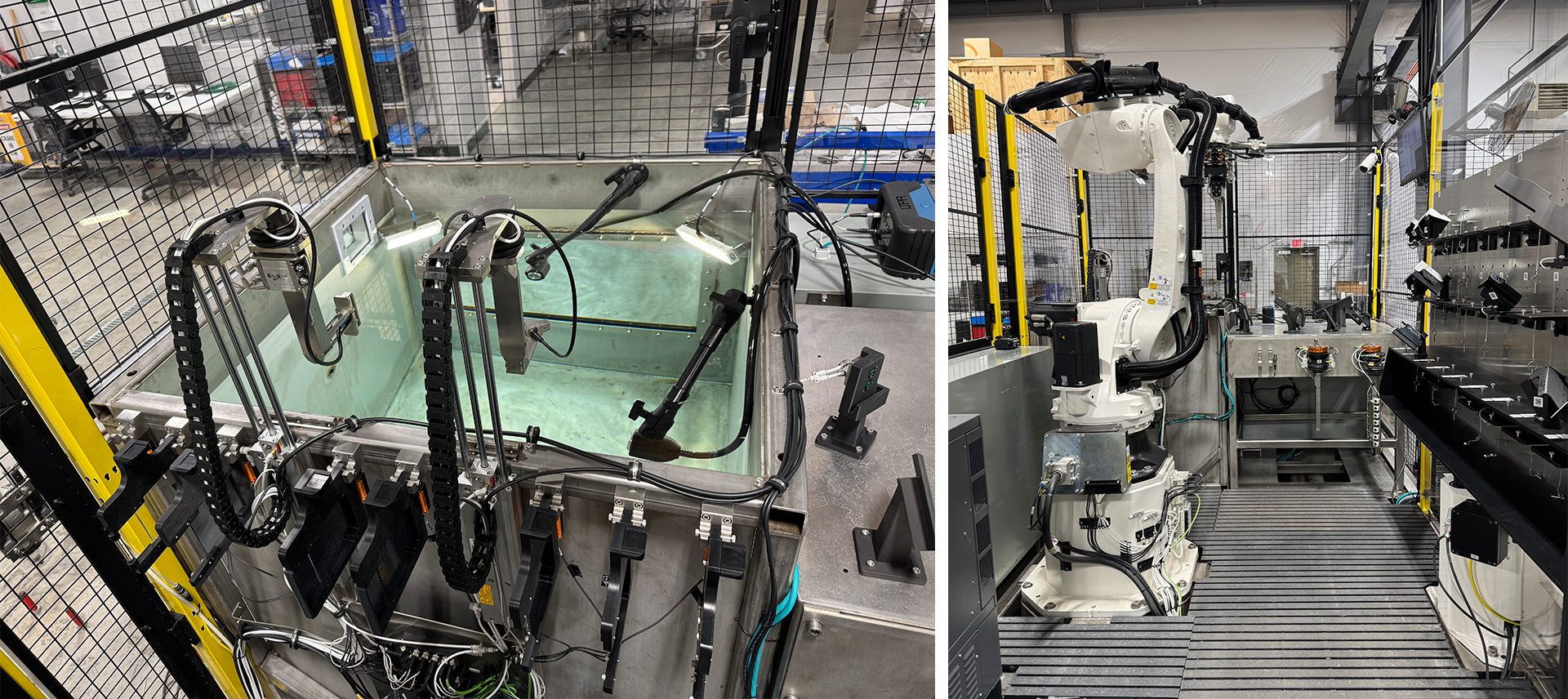
CHORUS (Comprehensive High-Output Robotic Universal-NDT System) is Innerspec’s advanced robotic non-destructive testing platform developed specifically for aerospace inspection using articulated robots. CHORUS is designed to support both large and small composite and metallic components and can be configured as single or multi-robot cells integrated with tracks, turntables, rotating scanners, part actuators, and immersion tanks.
CHORUS supports a wide range of inspection techniques, including conventional ultrasonics (Pulse-Echo, Through-Transmission, and Phased Array UT), as well as advanced NDT methods such as EMAT, Eddy Current, and Thermography. Robots may be equipped with standard or custom end effectors, and automatic tool changers allow rapid transitions between end-of-arm tools.
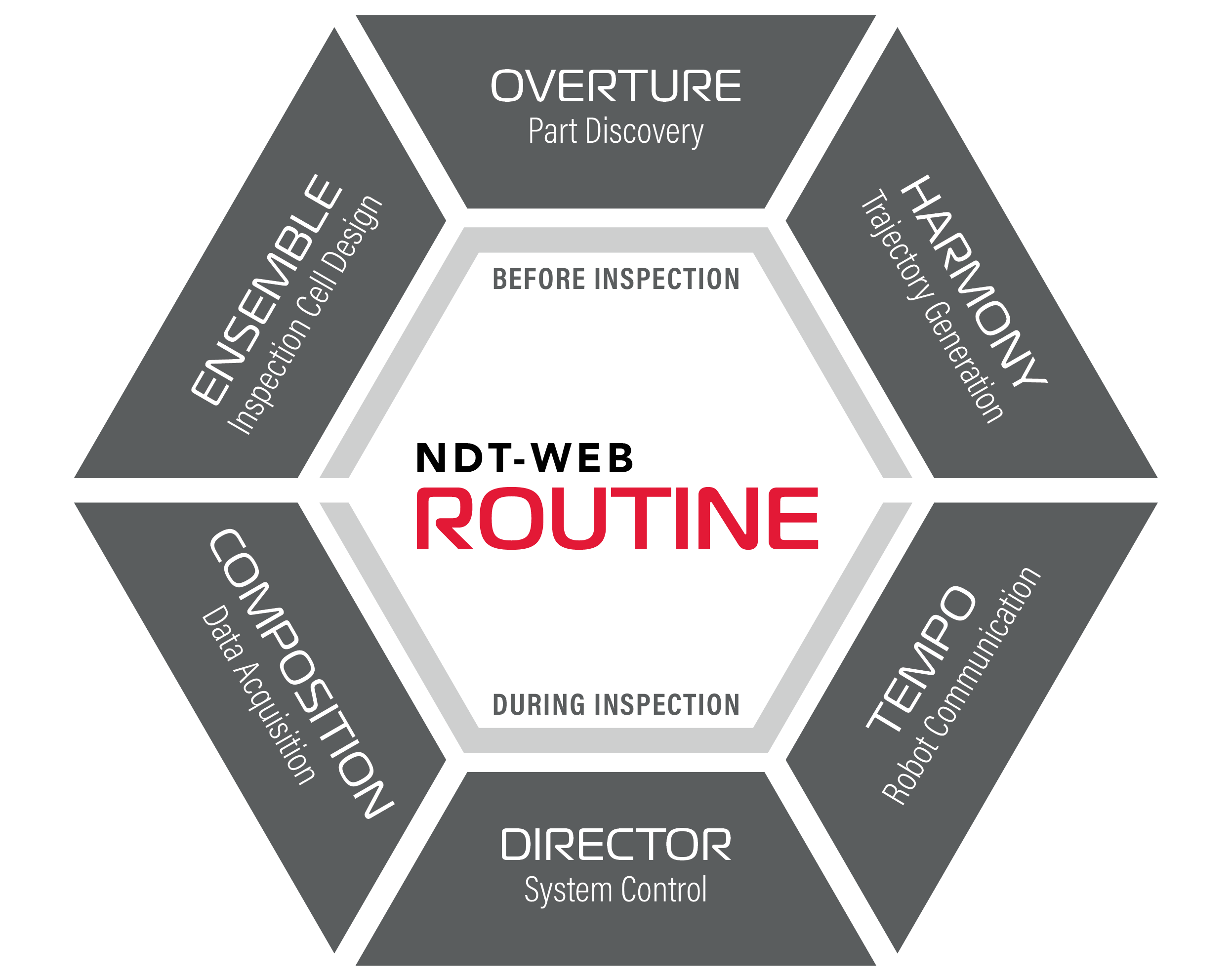
All system operations are managed through NDT-WEB ROUTINE a web-based software environment that integrates all offline and online inspection processes. ROUTINE includes tools for inspection cell design, 3D part discovery using cameras, automatic trajectory generation synchronized with robot motion, system coordination during inspection, and NDT data acquisition. CHORUS incorporates ultra-low-latency robot communication to tightly synchronize robot motion and data acquisition, enabling high inspection speeds while maintaining spatial accuracy:
CHORUS systems are designed in the United States and can be manufactured and assembled in the U.S. or Europe based on customer preference, providing a flexible and scalable platform for current and future aerospace inspection requirements.
Innerspec developed an adaptive ultrasonic alignment technique to manage part variability without relying on tight fixturing tolerances or manual intervention. Before scanning, time-of-flight measurements across the probe aperture are used to determine both distance and angular offsets between the probe and the part surface.
The probe is then rotated and re-measured to resolve surface orientation in a second axis. These measurements are used to dynamically adjust the robot TCP, ensuring each scan face is presented parallel to the UT probe at the correct inspection distance, enabling consistent data quality despite part-to-part variation.
During the project, the customer required a change in ultrasonic instrumentation. The originally requested instrument did not provide access to all of the data points required to implement the adaptive alignment and measurement technique.
Innerspec adapted the system architecture and transitioned to an alternative instrument with advanced adaptive signal processing, enabling the required functionality while maintaining production performance. This change demonstrates Innerspec’s ability to adapt to evolving customer requirements while delivering robust inspection solutions.
Beyond inspection performance, the project included full production integration:
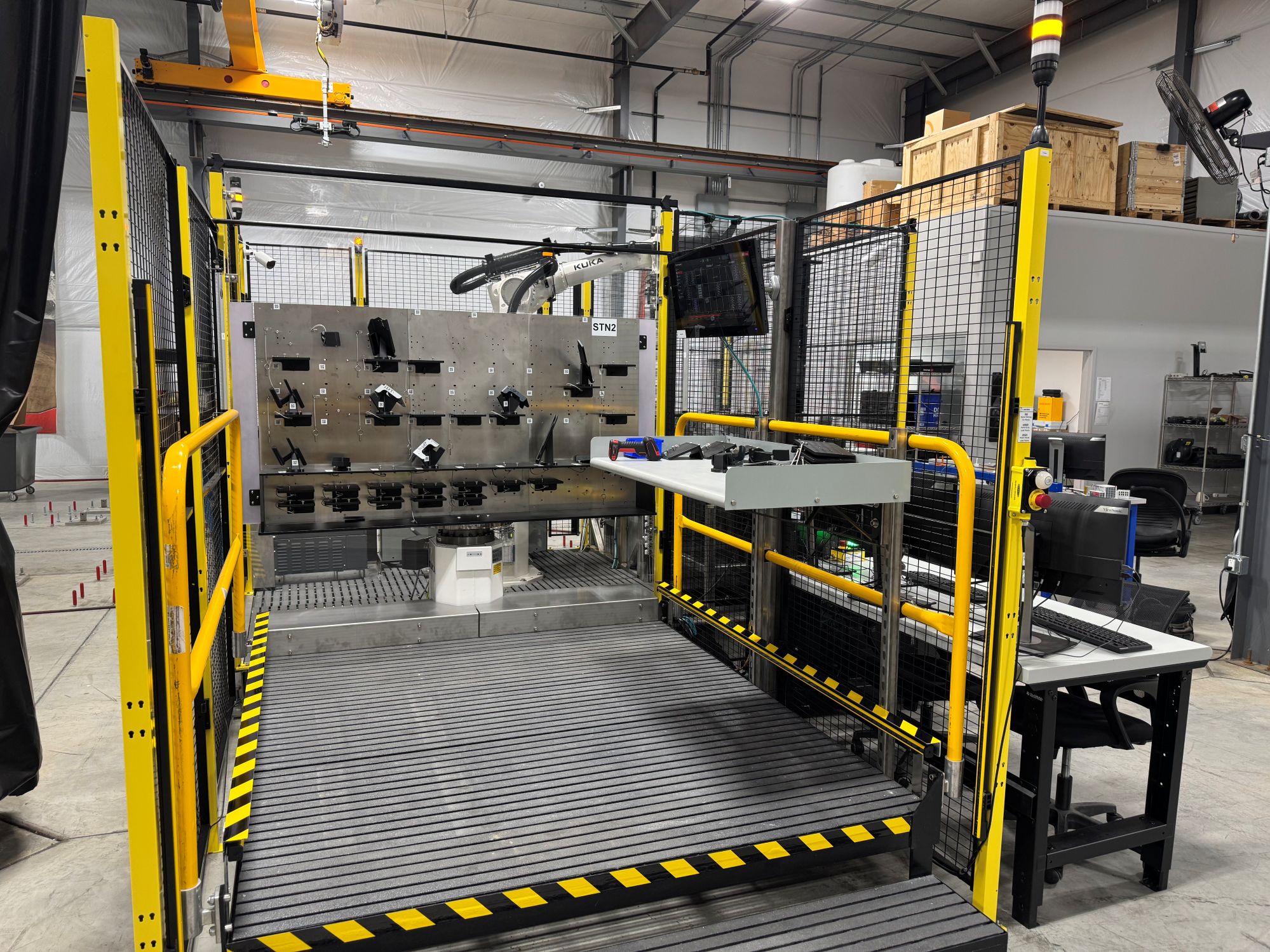
This deployment represents one example of how the CHORUS platform is improving NDT inspection in the aerospace sector. By combining robotics, adaptive ultrasonic processing, and production-aware automation, CHORUS enables robust, scalable inspection solutions for thermoplastic composites and other advanced aerospace materials.
The transition from rigid, "monument-style" hardware to the software-driven ROUTINE environment allows the system to manage nearly 2,000 unique part families with minimal manual intervention. By automating complex alignment and trajectory tasks, CHORUS eliminates traditional manufacturing bottlenecks, ensuring high-volume throughput and flight-critical precision in a truly future-proof platform.