
Innerspec dessarrolló con éxito una celda de inspección por ultrasonidos automatizada para clips de composite termoplástico en una planta de fabricación de aeronaves en los Estados Unidos. Construido sobre la plataforma robótica de END CHORUS de Innerspec, el sistema opera en un entorno de producción de alta demanda, brindando soporte a cerca de 2,000 familias de piezas únicas.
Los sistemas de ensayos no destructivos (END) robóticos se utilizan ampliamente en la fabricación a pesar de sus conocidos desafíos. Estas celdas de inspección son costosas, difíciles de operar y poco adecuadas para las realidades de la mayoría de los entornos de producción. Requieren reajustes frecuentes para adaptarse a la variabilidad de las piezas, dependen de programadores expertos y, a menudo, no cumplen con las expectativas de productividad. Una vez instalados, sus pórticos (gantries) fabricados a medida, robots modificados y hardware personalizado crean "monumentos" únicos que son difíciles de mantener y actualizar.
La planta de fabricación de aeronaves requería una solución de inspección capaz de ofrecer una alta productividad, resolviendo al mismo tiempo desafíos comunes como la variabilidad y la adaptabilidad de las piezas. La celda de inspección de Innerspec logra un tiempo de ciclo de dos minutos y treinta segundos para piezas que van desde laminados termoplásticos de 6 capas hasta 14 capas, manteniendo una calidad de inspección constante en una población de alta mezcla (high-mix) de geometrías complejas.
Un obstáculo principal fue la variabilidad en el conformado de las piezas termoplásticas, lo que a menudo resultaba en componentes que no eran consistentemente paralelos al transductor ultrasónico. Bajo estas condiciones, las inspecciones estándar de posición fija resultan imprácticas. En lugar de depender de tolerancias de sujeción (fixturing) estrictas o de la intervención manual, Innerspec desarrolló una técnica de alineación ultrasónica adaptativa. Esta tecnología compensa las desviaciones de la pieza en tiempo real, asegurando una adquisición de datos precisa sin ralentizar la producción.
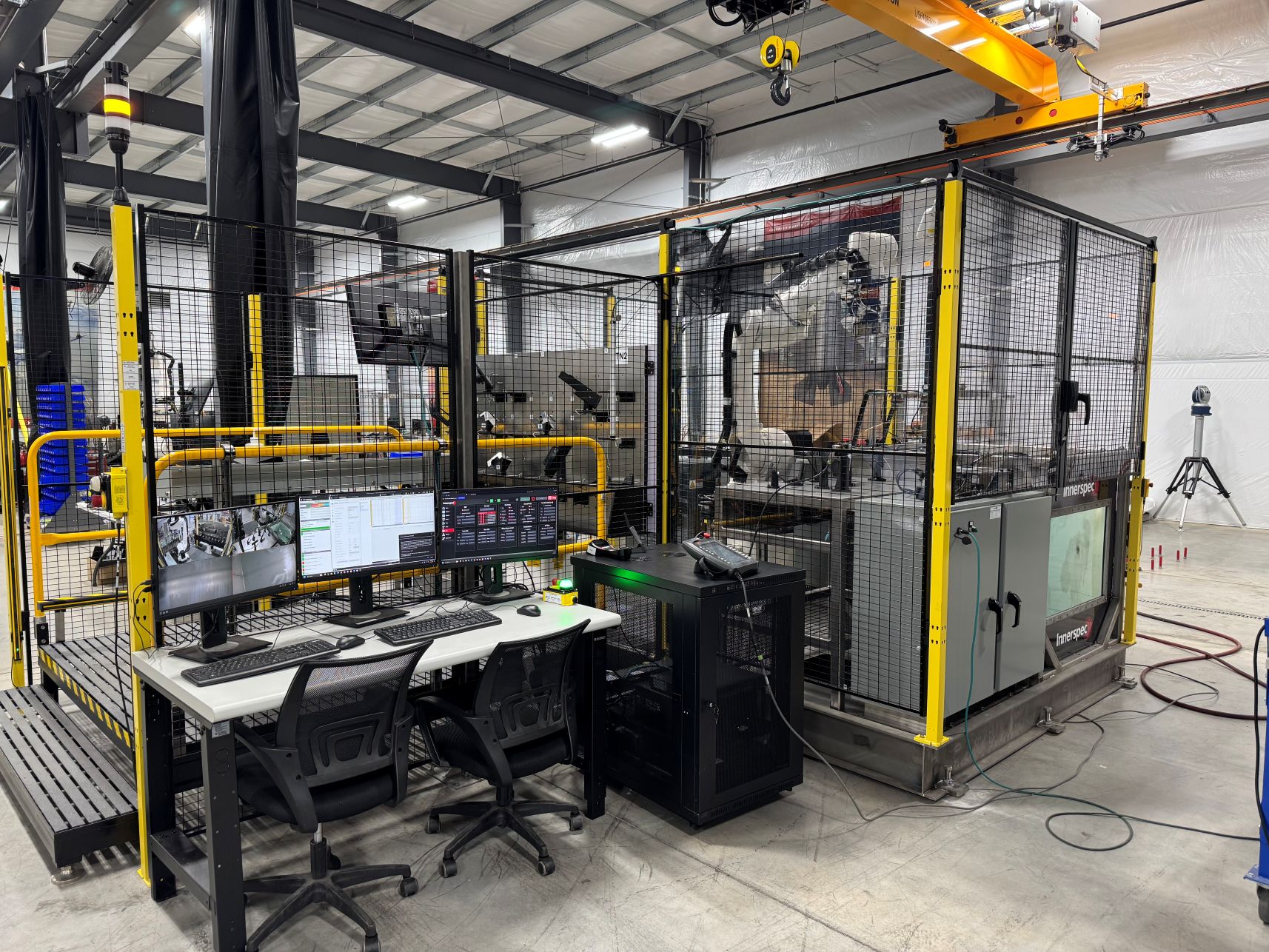
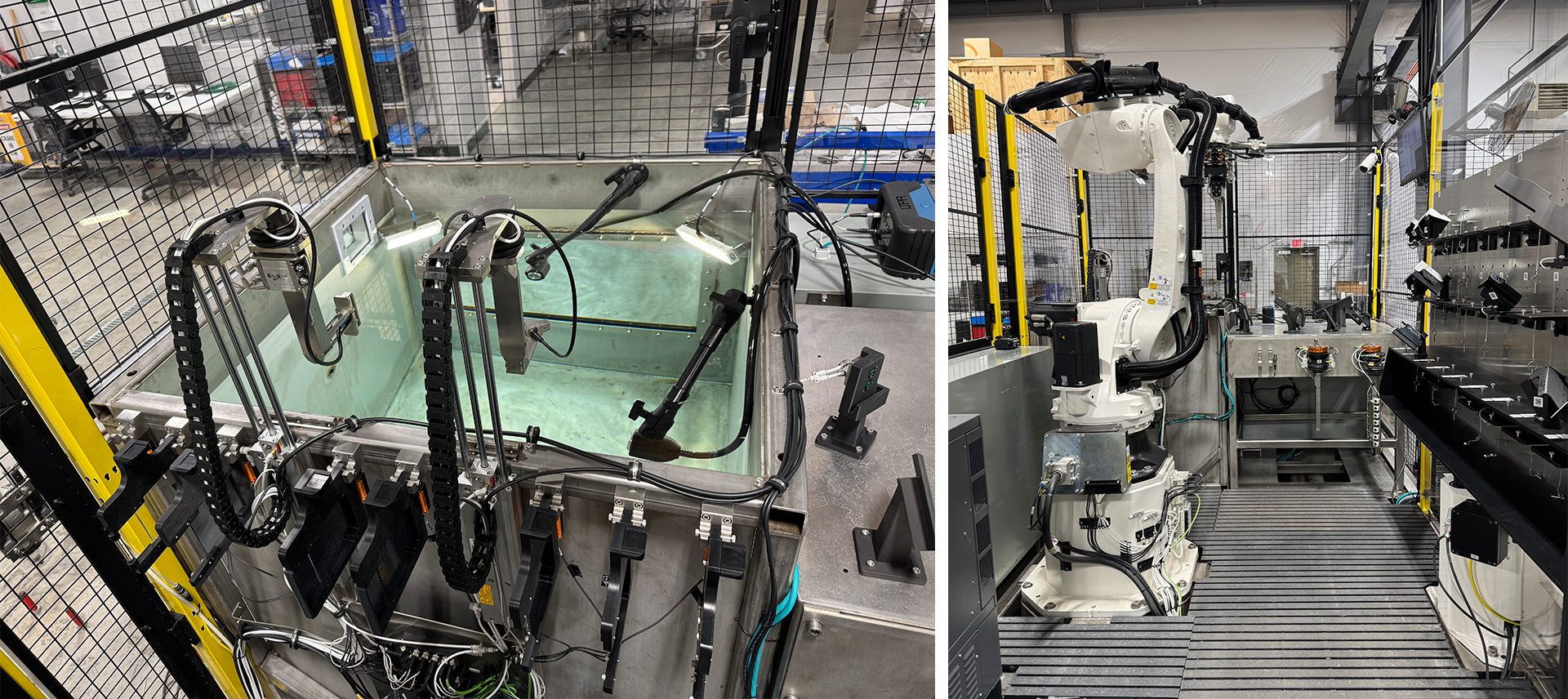
CHORUS (Comprehensive High-Output Robotic Universal-NDT System) es la plataforma avanzada de ensayos no destructivos robóticos de Innerspec, desarrollada específicamente para la inspección aeroespacial mediante el uso de robots articulados. CHORUS está diseñado para dar soporte a componentes tanto metálicos como de materiales compuestos (composites), de grandes y pequeñas dimensiones, y puede configurarse como celdas de robot único o multi-robot integradas con pistas (tracks), mesas giratorias, escáneres rotativos, actuadores de piezas y tanques de inmersión.
CHORUS es compatible con una amplia gama de técnicas de inspección, incluyendo ultrasonido convencional (Pulso-Eco, Transmisión y Phased Array UT), así como métodos avanzados de END como EMAT, Corrientes Inducidas (Eddy Current) y Termografía. Los robots pueden equiparse con efectores finales (end effectors) estándar o personalizados, y los cambiadores automáticos de herramientas permiten transiciones rápidas entre las herramientas de extremo de brazo (EOAT).
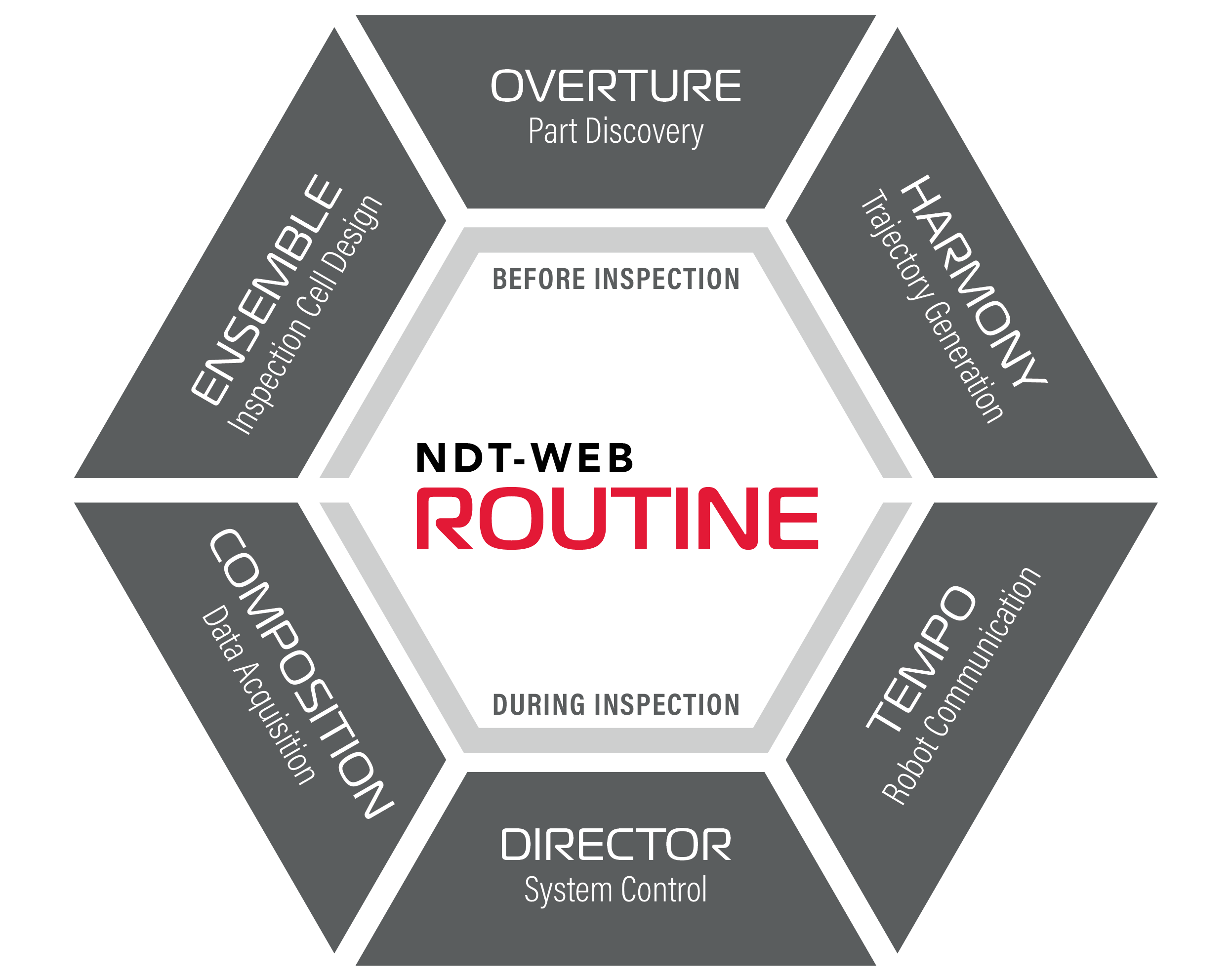
Todas las operaciones del sistema se gestionan a través de NDT-WEB ROUTINE, un entorno de software basado en web que integra todos los procesos de inspección tanto offline como online. ROUTINE incluye herramientas para el diseño de la celda de inspección, el descubrimiento de piezas en 3D mediante cámaras, la generación automática de trayectorias sincronizadas con el movimiento del robot, la coordinación del sistema durante la inspección y la adquisición de datos de END. CHORUS incorpora comunicación robótica de ultra baja latencia para sincronizar estrechamente el movimiento del robot y la adquisición de datos, permitiendo altas velocidades de inspección mientras se mantiene la precisión espacial:
Los sistemas CHORUS están diseñados en los Estados Unidos y pueden fabricarse y ensamblarse en EE. UU. o Europa según la preferencia del cliente, proporcionando una plataforma flexible y escalable para los requisitos de inspección aeroespacial actuales y futuros.
Innerspec desarrolló una técnica de alineación ultrasónica adaptativa para gestionar la variabilidad de las piezas sin depender de tolerancias de sujeción (fixturing) estrictas o intervención manual. Antes del escaneo, se utilizan mediciones de tiempo de vuelo (Time-of-Flight o ToF) a través de la apertura del transductor para determinar tanto la distancia como los desajustes angulares (offsets) entre la sonda y la superficie de la pieza.
Luego, el transductor se rota y se vuelve a medir para resolver la orientación de la superficie en un segundo eje. Estas mediciones se utilizan para ajustar dinámicamente el TCP (Tool Center Point) del robot, asegurando que cada cara de escaneo se presente paralela a la sonda de UT (Ultrasonic Testing) a la distancia de inspección correcta, lo que permite una calidad de datos consistente a pesar de la variación entre piezas.
Durante el transcurso del proyecto, el cliente solicitó un cambio en la instrumentación ultrasónica. El instrumento solicitado originalmente no proporcionaba acceso a todos los puntos de datos necesarios para implementar la técnica de alineación adaptativa y medición.
Innerspec adaptó la arquitectura del sistema y realizó la transición hacia un instrumento alternativo con procesamiento de señales adaptativo avanzado, lo que permitió habilitar la funcionalidad requerida manteniendo el rendimiento de producción. Este cambio demuestra la capacidad de Innerspec para adaptarse a los requisitos cambiantes del cliente mientras entrega soluciones de inspección robustas.
Más allá del rendimiento de la inspección, el proyecto incluyó una integración de producción completa:
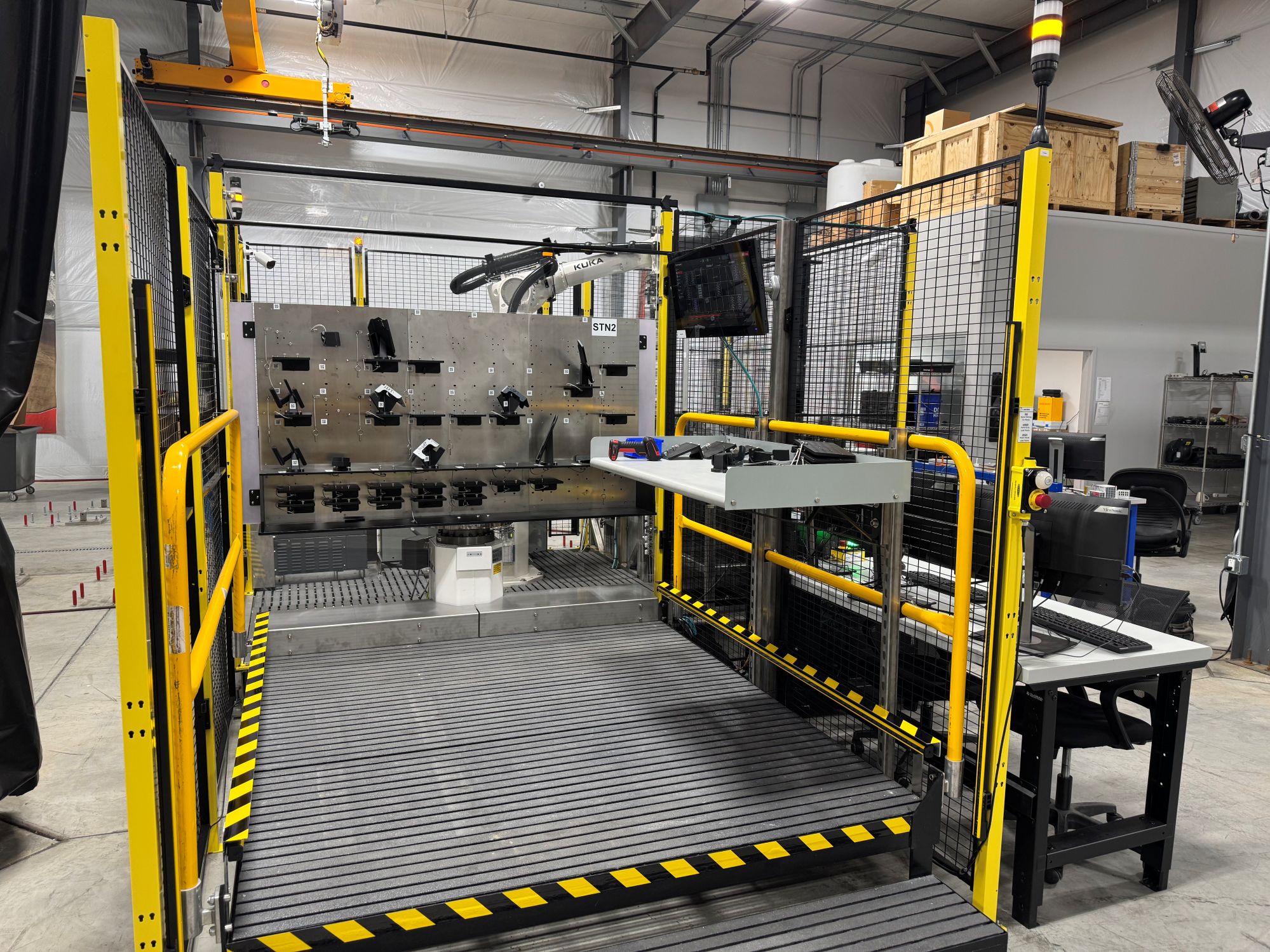
Esta implementación representa un ejemplo de cómo la plataforma CHORUS está mejorando la inspección de END en el sector aeroespacial. Al combinar robótica de precisión, procesamiento ultrasónico adaptativo y automatización orientada a la producción, CHORUS permite soluciones de inspección robustas y escalables para composites termoplásticos y otros materiales aeroespaciales avanzados.
La transición de un hardware rígido de "tipo monumento" a un entorno ROUTINE impulsado por software permite que el sistema gestione casi 2,000 familias de piezas únicas con una intervención manual mínima. Al automatizar las tareas complejas de alineación y trayectoria, CHORUS elimina los cuellos de botella tradicionales de la fabricación, garantizando un rendimiento de alto volumen (high-volume throughput) y una precisión crítica para el vuelo en una plataforma verdaderamente preparada para el futuro.